Sonny Gray Returns to Twins on Reported $55 Million Deal
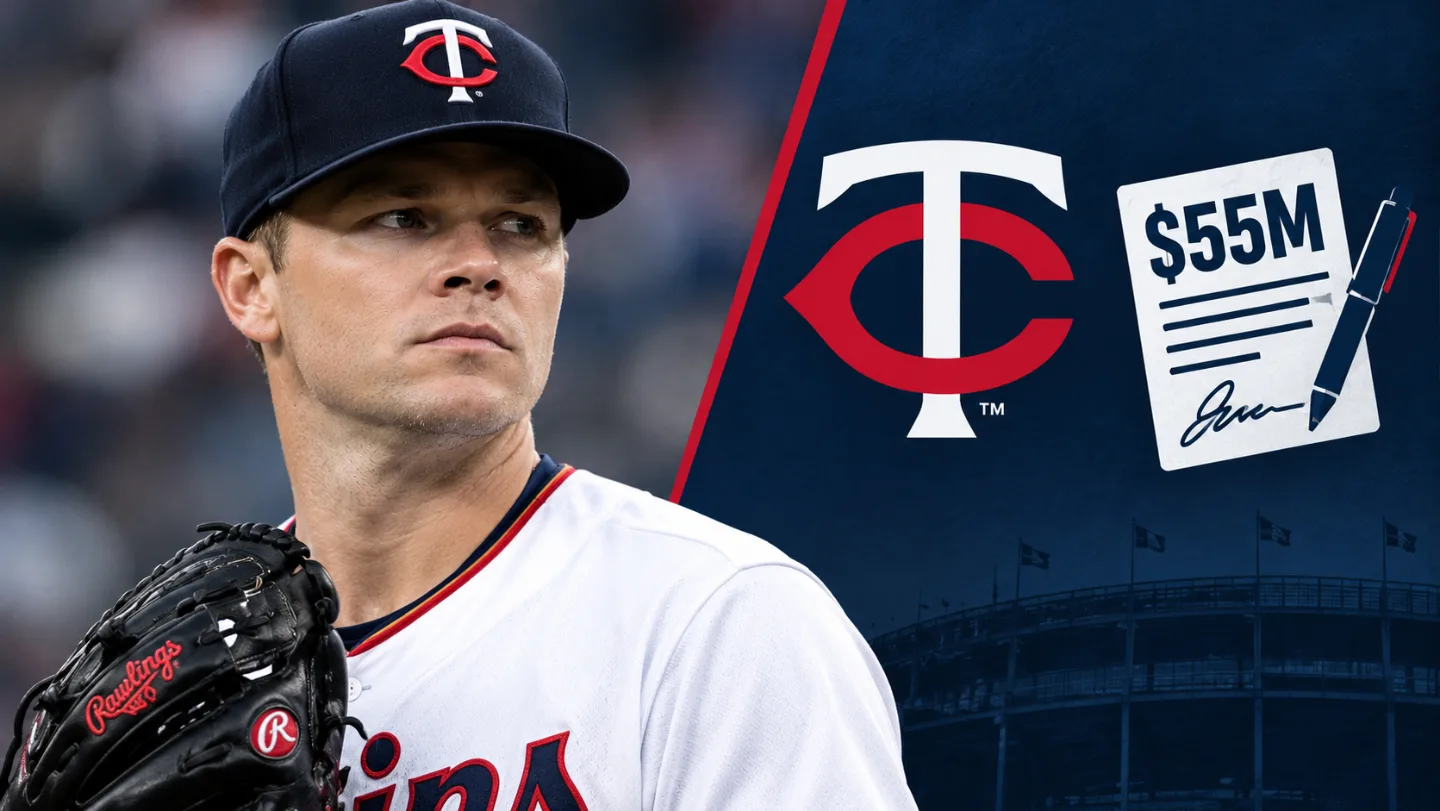
MINNEAPOLIS — Right-hander Sonny Gray is going back to the Minnesota Twins. The club announced the signing Wednesday, and ESPN’s Jeff Passan reported the terms as two years and $55 million, with an opt-out after the first season. Gray, 37, tied for the major league lead with 18 wins for the Boston Red Sox in 2026.
He pitched in Minnesota in 2022 and 2023. Now he returns to a team that finished 77-85 and has missed October three straight years.
A Quiet Winter Turns Loud In Minnesota
The Twins did not disclose financial terms, but MLB Network’s Jon Heyman and Passan both reported $55 million. If that holds, it’s Minnesota’s biggest free-agent investment in years and makes Gray the highest-paid pitcher in franchise history.
It’s also the second big move in two days. Catcher Ryan Jeffers accepted his qualifying offer Tuesday, and by EssentiallySports’ math the combined commitments push projected 2027 payroll past $170 million, well beyond the franchise record of roughly $155 million set in 2023.
A Retirement Question Answered In One Video
Gray sounded far from certain on Sept. 30. He had just been pulled from Game 2 of the AL Wild Card Series against the Yankees and said he might walk away for his family. By Oct. 9 he’d told The Boston Globe that pitching in 2027 was an “easy decision,” per that same report.
Wednesday the Twins posted a video of Gray speaking to fans directly. “I’m coming back. Can’t wait to see you at Target Field 2027,” he said.
Read the phrasing. No hedging, no talk of one more year, and no mention of the opt-out. It’s the language of a pitcher who made his peace with the decision long before the contract arrived.
The ending in Boston was sour. Manager Chad Tracy pulled him after 70 pitches and 4⅔ innings, with one run allowed, in the do-or-die Game 2, and the Red Sox lost to end their season. Gray expressed frustration with the call.
The Rotation Math In Minnesota And Boston
On the field, Gray went 18-5 with a 2.72 ERA, struck out 149 batters in 169 innings across 29 starts, and finished fifth in AL Cy Young voting. His .783 winning percentage led the American League.
The underlying numbers are less shiny. His 21.8 percent strikeout rate and 9.9 percent swinging-strike rate were his lowest since 2016, and his four-seamer averaged a career-low 91.5 mph, according to the same EssentiallySports breakdown. Hitters made contact on 92.1 percent of his pitches in the zone.
He survived on location and a 46 percent ground-ball rate. That works until it doesn’t.
The opt-out is Minnesota’s hedge and Gray’s insurance. Fantasy Alarm’s read is blunt: if Gray pitches well, he can walk after one year, and if he struggles, the Twins are stuck with the second.
Gray also arrives with a crowded room. Joe Ryan, Bailey Ober, Dean Kremer and Taj Bradley are in the mix, with Pablo López working back from elbow surgery that cost him all of 2026 and prospects Connor Prielipp, Zebby Matthews and Mick Abel pushing from below. Bradley went 12-6 with a 3.73 ERA and 205 strikeouts in 178 1/3 innings.
A surplus like that rarely survives to Opening Day. Twins Daily and Puckett’s Pond see Ober as the most expendable arm, per EssentiallySports, and Minnesota still wants a bat and bullpen help.
Boston Loses Its Anchor, Minnesota Gets Its Message
For Boston, the loss stings. Sports Illustrated’s Red Sox site called it a major blow and noted the club is thin on right-handed starters, with Garrett Crochet having battled shoulder and lat injuries in 2026.
There’s a small Yankees subplot, too. Gray has said he never wanted to go to the Bronx in the first place, and the Twins are 12-27 against New York since 2021, according to the AOL report. A veteran with that history becomes a useful pick for a team that keeps losing those games.
The front-office test comes first. Minnesota has until Dec. 1 to turn its rotation surplus into a bat and bullpen help before a possible lockout freezes everything.
Then comes the on-field test. Gray is 37, his velocity is down, and his margin for error is thinner than that 2.72 ERA suggests.